REVIEW · FAIRBANKS
Fairbanks: Riverboat Cruise and Local Village Tour
Book on GetYourGuide →Operated by Riverboat Discovery · Bookable on GetYourGuide
Somewhere between river bends and dog teams, Fairbanks feels real. This 3-hour Chena River Discovery III outing mixes views, living history, and front-row wildlife-adjacent Alaska with a bush pilot demo and dog mushing at Susan Butcher’s kennel.
I especially like the pacing: you get two river segments with multiple stops, so the cruise isn’t just “sit and watch.” The second win is the variety at ground level, from an Athabascan village walk to seeing how sled dogs fit into the region’s daily rhythms.
One thing to consider is that it’s a heavily scheduled experience in a short time. If you hate crowds or you want long free roaming, you may feel a bit rushed between the boat, the village, and the kennels.
In This Review
- Key points I’d put at the top
- Getting Oriented: What This Riverboat Adventure Feels Like
- The Chena River Cruise on Discovery III: Views Plus Moving Explanations
- Why the river time is more than scenic
- What to watch for onboard
- The Athabascan Village Walk: What Survival Looked Like in Real Objects
- What you’ll see on the walk
- The stories that make it stick
- Bush Pilot Demo Next to the Boat: Why Aviation Is the Real Alaska
- Dog Mushing at Susan Butcher’s Trail Breaker Kennel: More Than a Cute Demonstration
- What happens here
- A practical viewing tip for kennel photos
- Food and Drinks: Complimentary Coffee, Then Real Options
- Price and Value: Is $127 Worth It for 3 Hours?
- Who Should Book This Tour (And Who Might Skip It)
- Should You Book This Fairbanks Riverboat and Village Tour?
- FAQ
- How long is the Fairbanks riverboat cruise and village tour?
- Where do I meet for the tour?
- What’s included in the price?
- Is food available during the tour?
- What language is the tour guide?
- Is this tour wheelchair accessible?
- What is the cancellation policy?
Key points I’d put at the top
- Chena River views in motion, with narrated stops instead of one long straight run
- Athabascan village walking tour focused on daily life, tools, and survival adaptations
- Bush pilot takeoff and landing right by the boat, with context for remote Alaska
- Trail Breaker Kennel visit and dog mushing demonstration, including champion-team talk
- Seating affects what you can see, especially for kennel views and smaller screens on board
- Food is optional but easy, with complimentary coffee and donuts plus on-site purchases
Getting Oriented: What This Riverboat Adventure Feels Like
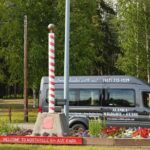
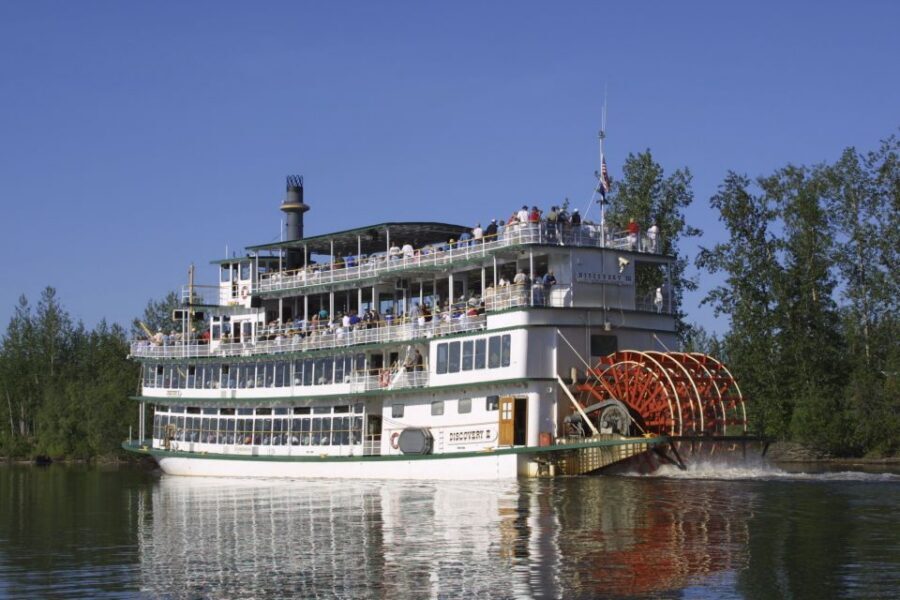
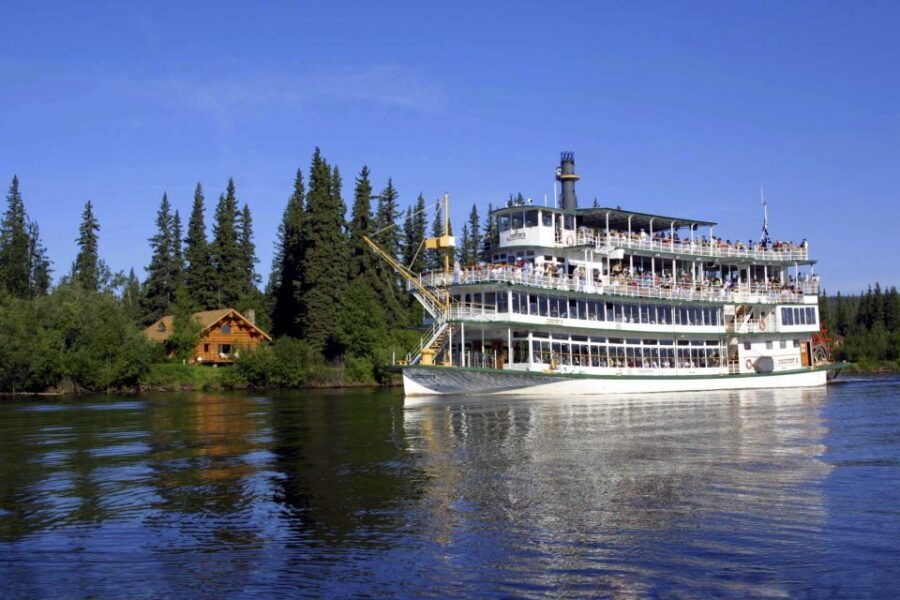
This is a short, high-impact tour designed for people who want a clear Alaska snapshot without driving all over town. You meet at 1975 Discovery Dr, a few miles from Fairbanks International Airport, and you’re quickly on the water aboard the Riverboat Discovery (often described as Discovery III).
The best way to think about it is this: the cruise is the “glue,” and every stop explains a different piece of how people live in the Interior. The boat narration and on-water demos set the tone. Then you step into a village setting for the human story. Then you return to the power of the region’s working animals and aviation.
You’ll also notice the tour is built around front-row moments. People aren’t just looking at things far away. They’re seeing planes work, hearing how food and protection were made in winter conditions, and watching the dog program in action.
If you're still narrowing it down, here are other tours in Fairbanks we've reviewed.

The Chena River Cruise on Discovery III: Views Plus Moving Explanations
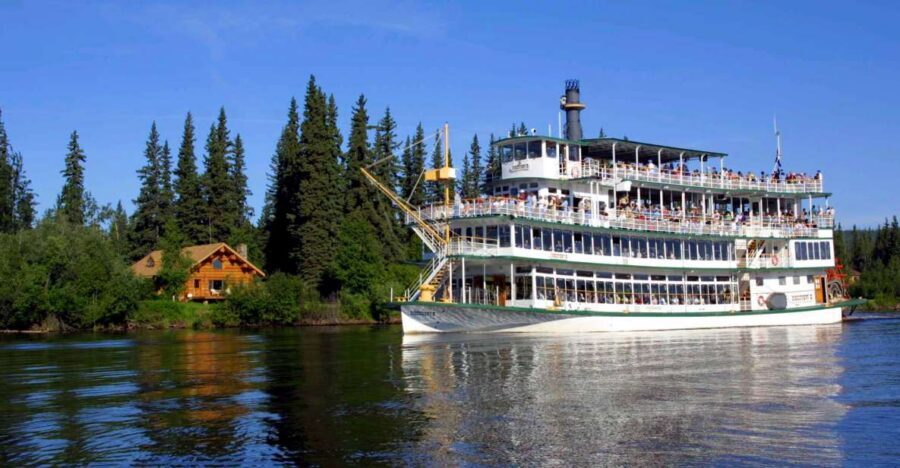
The core experience is a 3-hour guided river cruise broken into segments, which makes the time feel shorter and more varied. The boat moves along the Chena River, and you get narration as you go, with stops to connect the scenery to real life in the Interior.
Why the river time is more than scenic
A lot of Alaska cruises are mostly “pretty water.” Here, the cruise is used as a classroom in motion. You’ll get guidance that ties what you see outside the windows to what you’ll hear on land later: how access works, what animals do for transportation, and why aviation matters when roads run out.
What to watch for onboard
From what’s been described, the boat experience includes visual aids (monitors and camera views) to help you see demos even if you’re not in the best seat. That’s a smart design trick when you have a mixed group and an active schedule.
Still, there’s a practical catch: if you’re aiming to watch details for kennel areas later, your seat matters. Some people noted that glare on smaller screens can make them harder to use from certain angles. If you’re choosing where to sit, I’d aim for a position with a clear sightline to both the deck activity and the interior visuals.
The Athabascan Village Walk: What Survival Looked Like in Real Objects
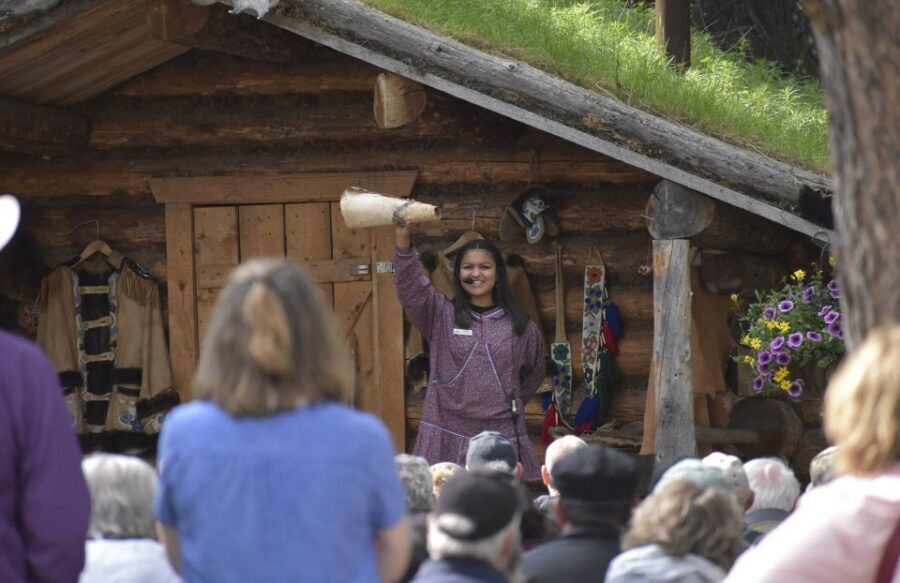
The most human stop is the guided walk through a Chena village setting, with guides explaining life as an Athabascan community would have understood it. This portion is about more than culture as “costume.” It’s about how people built homes, stored supplies, and used local animals for food and protection.
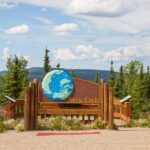
What you’ll see on the walk
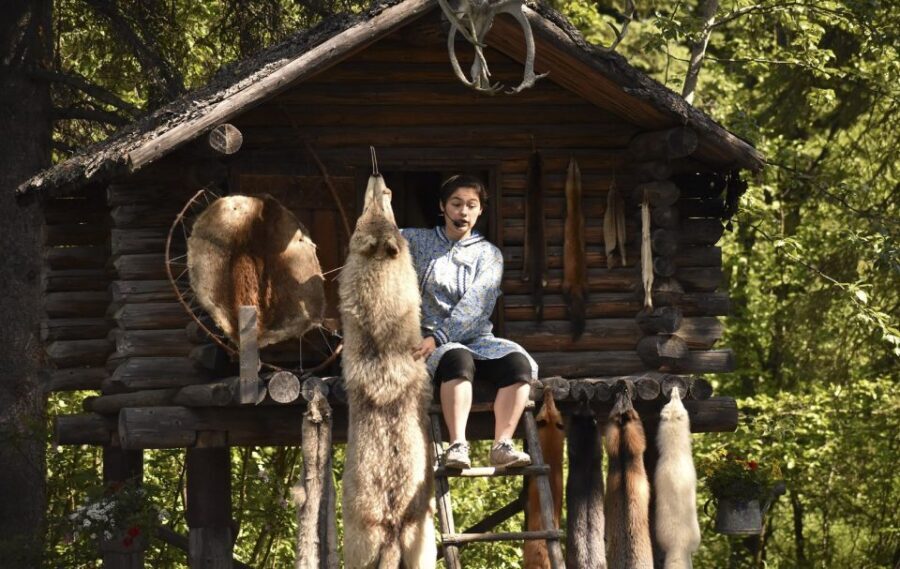
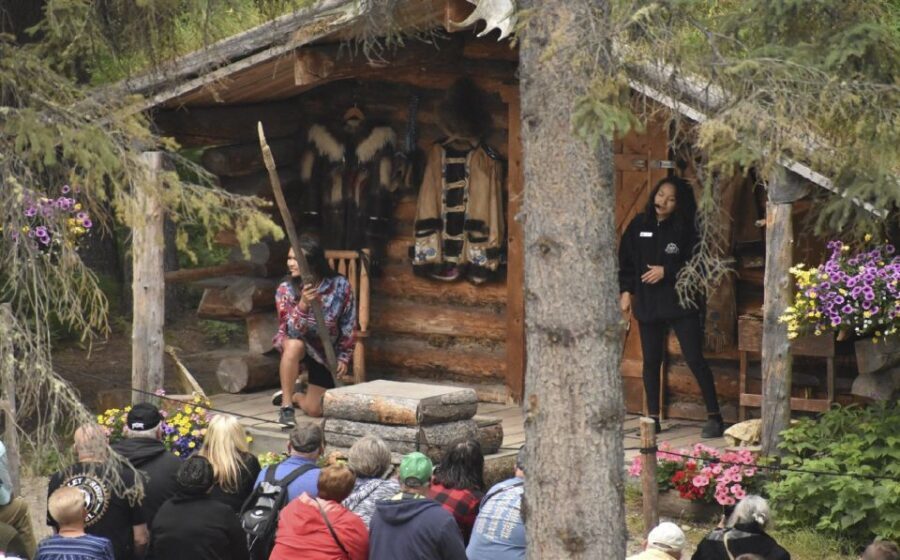
You’ll encounter an Athabascan village with structures made in the traditional style, including spruce log cabins and a spruce bark hut. You’ll also see a cache used for storing supplies, plus fur pelts and other material culture tied to seasonal life.
That object-based approach is one of the strongest parts of the day, because it turns vague “frontier” ideas into something you can picture. You can stand there and connect the dots: the materials are local, the designs are practical, and the system works even when weather is harsh.
The stories that make it stick
The guides explain how animals like wolf, fox, martin, and beaver were used for both food and protection. You’ll also hear how Athabascan communities survived for over 10,000 years, and how village life changed as Western culture arrived in the past century.
After the guided portion, you’ll have time to explore on your own and interact with the guides. That free-walk chunk matters, because it lets you ask the follow-up questions that tours often cut off too soon.
Bush Pilot Demo Next to the Boat: Why Aviation Is the Real Alaska
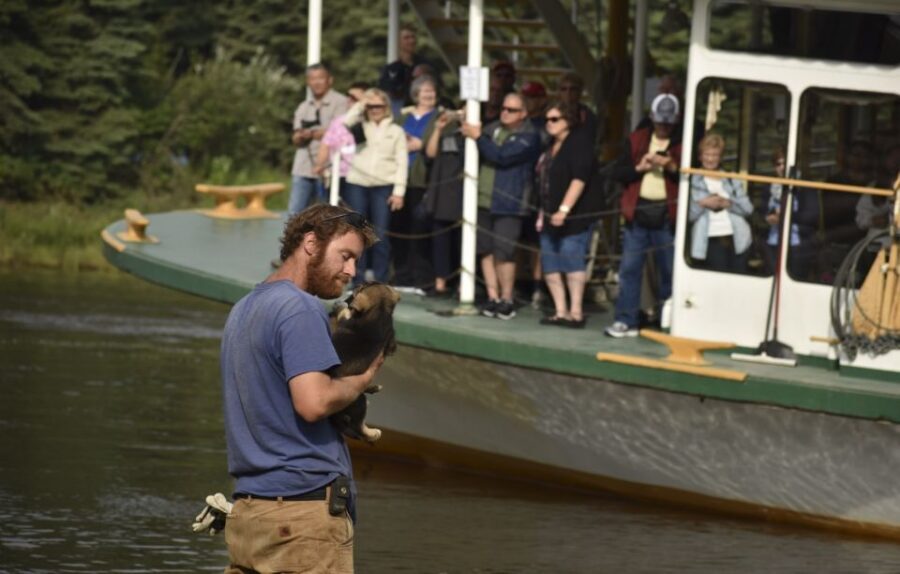
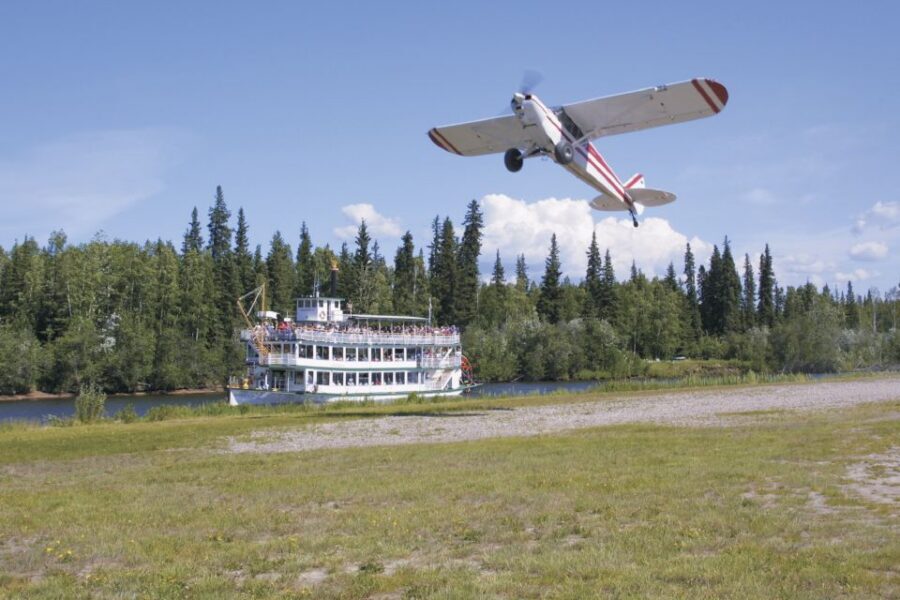
One of the most memorable moments is the chance to watch a bush pilot take off and land right next to the boat. This isn’t presented as a stunt. The pilot shares stories about village life and explains the role airplanes play in remote Alaska.
In practical terms, this demo helps you understand why the Interior is different from places you reach by highway. When you’re far from stores, hospitals, and roads, aviation becomes the delivery system and the connection to the outside world. Seeing it happen close up makes that point much easier to absorb than hearing it as a theory.
If you like hands-on moments, this is your best “wow” stop. It also pairs well with what you learn in the village walk, because it shows the modern layer of how people keep communities running.
Dog Mushing at Susan Butcher’s Trail Breaker Kennel: More Than a Cute Demonstration
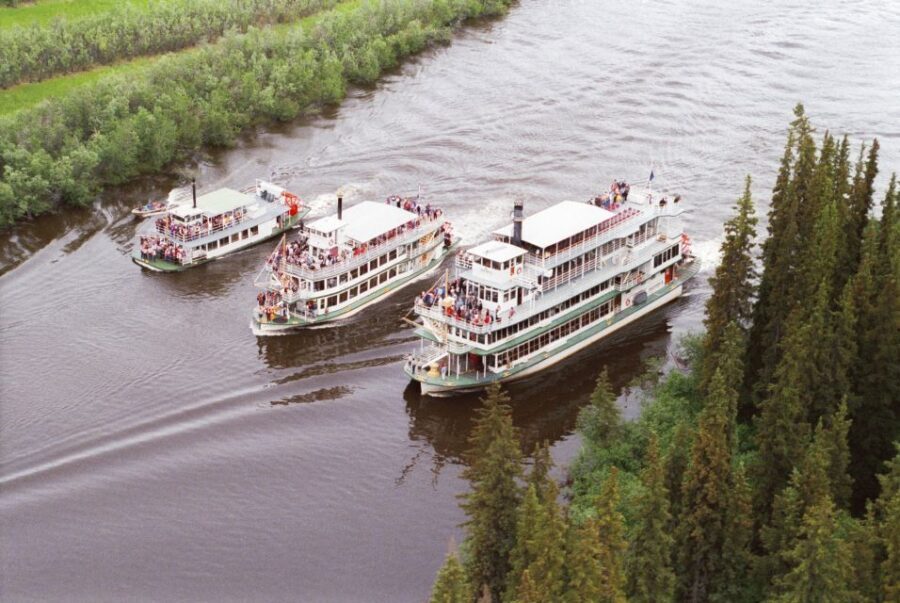
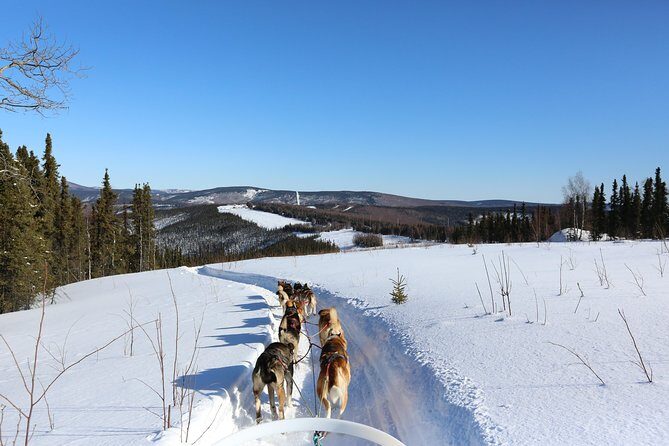
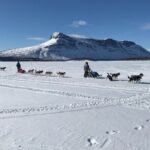
The dog component is a big part of why people choose this tour, and it’s not just a quick photo moment. You’ll stop at the home and kennel of Susan Butcher, the late four-time Iditarod champion, as you pass Trail Breaker Kennel along the Chena River.
What happens here
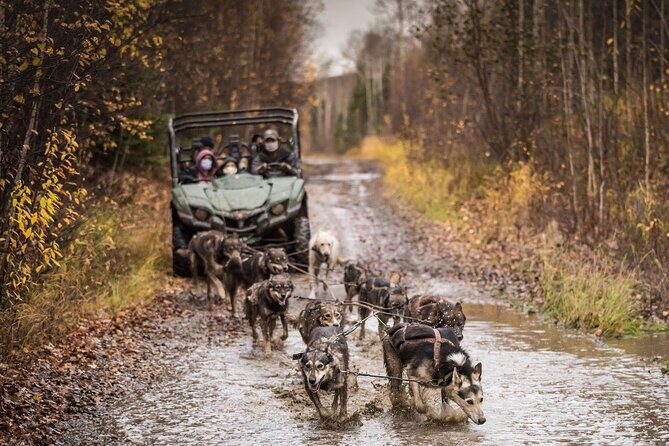
You’ll learn about kennel life and the work behind building a competitive sled dog team. Puppies are part of the scene, playing while waiting for their future roles, and you’ll get a dog mushing demonstration with stories connected to the trails.
This part works well because it’s anchored in effort and routine. Instead of treating sled dogs as entertainment, the tour frames them as athletes and partners, supported by training and constant care.
A practical viewing tip for kennel photos
Dog kennel areas may not be equally visible from every seat. One review noted that kennel views can be limited unless you’re positioned on the side facing the kennels, and smaller screen glare can reduce usefulness from certain angles. If dogs are your top priority, I’d treat seating like a decision: try to pick a spot that matches what you care about most, whether that’s the deck activity or the interior screen.
Food and Drinks: Complimentary Coffee, Then Real Options

You get complimentary coffee and donuts, which is a nice little momentum builder, especially if the morning or afternoon is chilly. After that, food is flexible.
There’s a place called Captain’s Corner inside Steamboat Landing, where you can find freshly made sandwiches, wraps, and salads made daily. You can enjoy lunch on a deck and take in the Chena River views.
On the boat, beer, wine, and snacks are available for sale. If you’re watching your budget, plan around the complimentary items and decide later whether you want a full lunch.
Price and Value: Is $127 Worth It for 3 Hours?
At $127 per person for about 3 hours, this isn’t a bargain-basement activity. But you are paying for a tight bundle of high-demand Alaska experiences in one shot:
- A guided river cruise along the Chena River with multiple stops
- A guided Athabascan village walking tour focused on tangible village life
- A bush pilot takeoff and landing demo right by the boat
- A stop at Trail Breaker Kennel plus a dog mushing demonstration
- Coffee and donuts included
For Fairbanks, the value question usually comes down to logistics. If you had to piece this together yourself, you’d likely spend more time coordinating transportation and guides, and you still might not get as much in one morning/afternoon block. Here, you get a guided structure that keeps the day moving while still giving you time to walk and explore at the village stop.
The main “value risk” is the short duration. If you want deep, slow learning, you might wish the village stop ran longer. If you’re happy with a guided sampler that still covers real details, the price starts to feel fair.
Who Should Book This Tour (And Who Might Skip It)
This is a strong fit for you if:
- You want Alaska-specific experiences (river + village + bush plane + sled dogs) without hopping around town
- You like guided context and hands-on demonstrations
- You’ll enjoy seeing both people’s history and working-animal culture in one visit
You might consider skipping or adjusting expectations if:
- You dislike structured tours with limited free time at each stop
- You’re extremely sensitive to crowds or schedule pacing
- You mainly want long outdoor walking in the wilderness rather than short, guided “contact points”
It also tends to work well for mixed ages, since the time on board is comfortable and the village walk is guided with a set path.
Should You Book This Fairbanks Riverboat and Village Tour?
Book it if you want the kind of Fairbanks day that checks multiple boxes fast and still feels grounded in how life actually works in the Interior. The Chena River setting, the Athabascan village walk, the bush pilot demo, and the Trail Breaker Kennel dog program together form a clear Alaska storyline: land, people, animals, and aviation.
Skip it only if you know you need unstructured time, or if you’re the type who gets frustrated when demos and movements happen on a tight clock. If that’s not you, this 3-hour outing is a smart use of daylight in Fairbanks and a very practical way to get more meaning than just scenic photos.
FAQ
How long is the Fairbanks riverboat cruise and village tour?
The tour runs for 3 hours total.
Where do I meet for the tour?
Meet at 1975 Discovery Dr at the end of Discovery Drive.
What’s included in the price?
It includes the guided river cruise, a guided walking tour of a Chena village, a bush pilot demonstration, a dog kennel stop with a dog mushing demonstration, plus complimentary coffee and donuts.
Is food available during the tour?
Coffee and donuts are included. Additional food is available for purchase, including items at Captain’s Corner and snacks, beer, and wine aboard the boat.
What language is the tour guide?
The live tour guide provides narration in English.
Is this tour wheelchair accessible?
Yes, the experience is listed as wheelchair accessible.
What is the cancellation policy?
There is free cancellation up to 2 days in advance for a full refund.